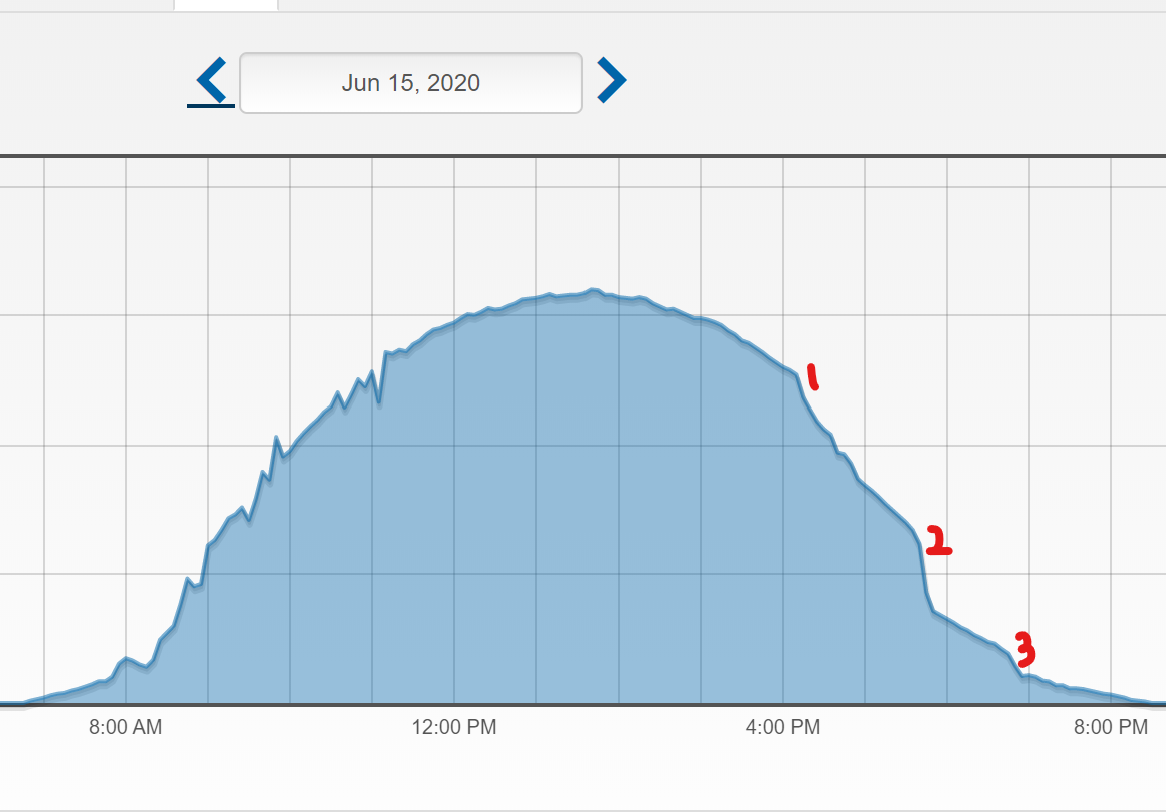
This chart shows daily production of the 25 x 325-watt panels where there are minimal clouds and less than ideal conditions for the array later in a summer evening. At around 4:15 pm (1), the first string of 5 panels begins a significant reduction in power. At 5:41 the second string of 10 panels begins to shade and quickly drops production of that string. Finally, at 6:47 pm, the last string of 10 panels begins to shade.
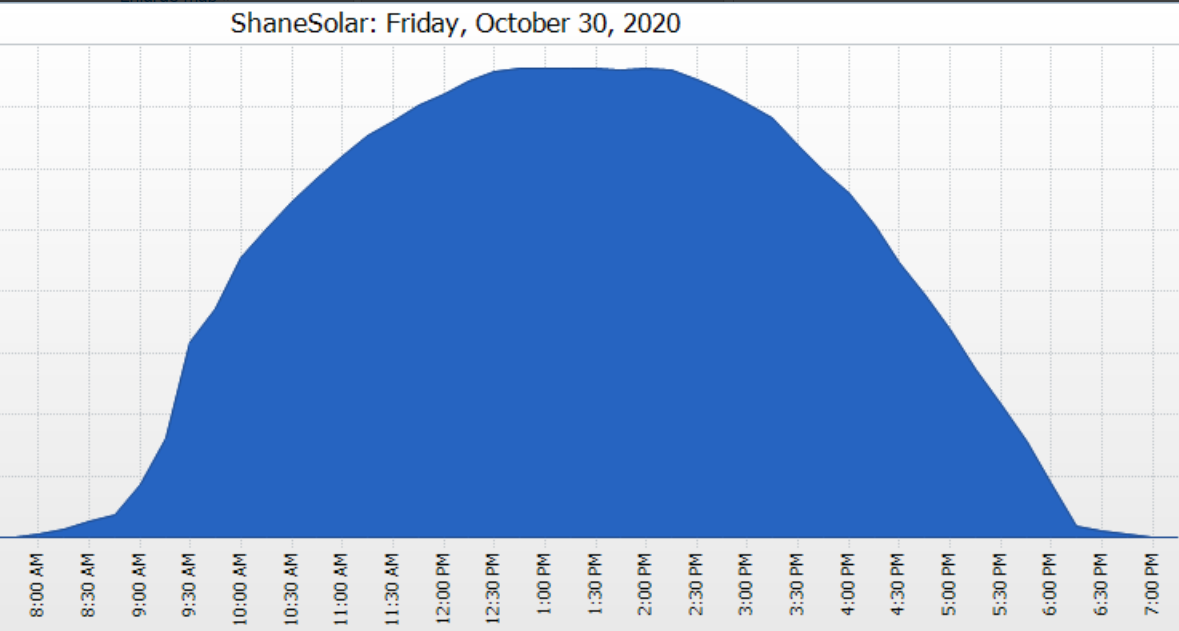
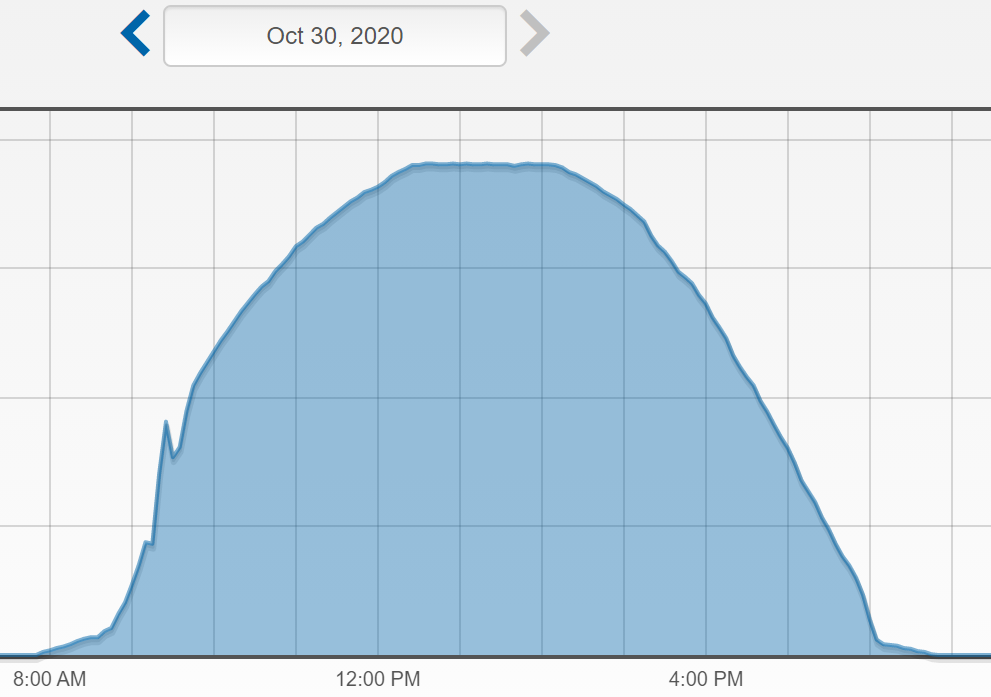
During a typical Florida summer day, the evening hours sometimes produce heavy clouds and thunderstorms. This reduces the impact of the second story shading the solar panels. The design of the ground mount with a 15′ back height also helps to continue producing as late into the day as possible in the current configuration. Based on my calculations, on a cloudless summer day, I’m losing about 4% of the possible energy production for the day. I can calculate loss fairly accurately as I have a smaller, second array that is not affected by the shade of the 2nd story. I’ve considered optimizers, however, I like the simplicity of the strings and I’m not convinced it will provide much of an improvement over the current configuration.
With Duke Energy providing a credit bank of unused kilowatts, it may have been better to reduce the panel angle to 5-10 degrees. This would likely improve summer production and reduce the shade to the lower edge of the ground mount which is currently 8′ in height. I could then use the kw credits later in the year. Duke will zero out the credits and pay me .06 for them a the end of the calendar year so maybe it’s best at 21 deg.
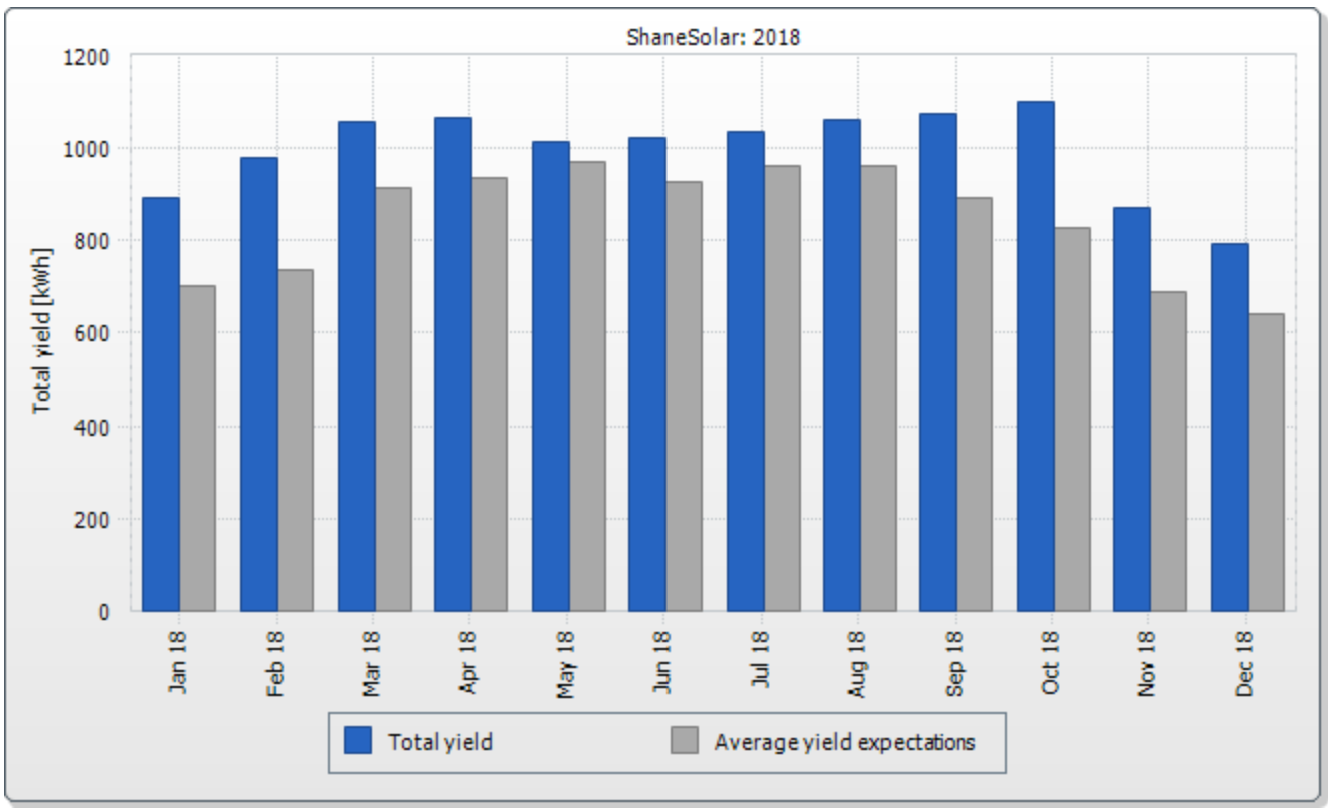
The design of the array puts the panels at 21 degrees to distribute efficiency through summer and winter. The panels are cooler in fall and spring. With the reduced shade and 21-degree angle, the production in March and October exceeds that of a perfect summer day.

2 Responses to The Effect of Shade on the Main Solar Array